Buck Deer Lineart: A Seasonal Embroidery Staple
First Impressions: Rustic Charm Meets Holiday Warmth
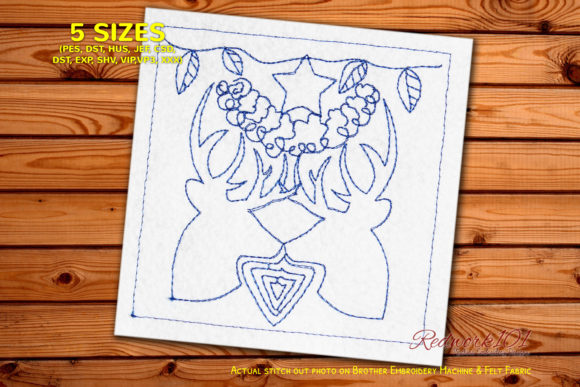
As an embroidery designer who’s built six seasonal collections for Etsy sellers and craft fairs, my first glance at Buck Deer Lineart landed right where it should: on mood. This isn’t a cartoonish or overly stylized deer—it’s clean, confident line art with quiet authority. Two buck heads rendered in balanced symmetry evoke forest stillness, autumnal transition, and quiet reverence—perfect for fall harvests, Thanksgiving gatherings, winter solstice decor, and even rustic Christmas gifting. It feels cozy, rustic, and subtly elegant, never kitschy or juvenile. There’s no clutter, no forced festivity—just strong silhouette, intentional negative space, and a natural rhythm that reads beautifully at multiple scales. That makes Buck Deer Lineart unusually versatile across holiday product categories.
Where It Shines: Real-World Seasonal Product Use
I’ve tested Buck Deer Lineart across eight common small-shop applications—and it delivers consistently:
- Sweatshirt embroidery: Stitches crisply on midweight fleece; the clean lines prevent “fuzz bleed” and hold definition through repeated wear and washing.
- Tote bag design: Looks grounded and artisanal on natural canvas or linen-cotton blends—ideal for farmers’ market shoppers and gift-ready packaging.
- Kitchen towel embroidery: Works best when placed near the hem or corner—its simplicity avoids visual competition with bold patterns while adding subtle thematic warmth.
- Pillow cover & table linen accents: Elevates neutral linens without overwhelming them. Paired with oatmeal, charcoal, or deep forest green thread, it reads as premium handmade—not mass-produced.
- Embroidered patch: Holds shape beautifully when heat-applied or sewn on; ideal for family matching sets (think matching flannels or aprons for holiday baking).
- Ornaments & baby items: Scales down cleanly to 3–4 inches—no loss of recognition. On felt or cotton twill ornaments, it reads instantly as “woodland holiday.”
- Personalized gift: Pair with monogrammed initials or a short sentiment (“Our Wild Heart,” “Home Grown”) for Etsy listings that convert during November–December traffic surges.
- Printable mockup & social preview: Its high-contrast line work renders flawlessly in flat-lay photos and Instagram carousels—critical for scroll-stopping Etsy thumbnails and holiday email banners.
Where to Proceed Thoughtfully
Even strong designs have limits—and knowing them protects your reputation and customer satisfaction. With Buck Deer Lineart, here’s where I advise extra care:
- Small hoop sizes (under 4”): The dual-head composition benefits from breathing room. Avoid cramming both bucks into a tiny circle—opt for one head only if space is tight.
- Thick or textured fabrics (terry cloth, heavy denim): Stitch density matters. Test on scrap fabric first—dense stitching can pucker thick weaves. A medium-weight cutaway stabilizer helps maintain line integrity.
- Dark fabric + light thread: While the line art is bold, fine interior strokes may soften visually. Use matte polyester or rayon thread (not silk or metallic) for optimal contrast.
- Stretchy garments (ribbed knits, performance blends): Always use tear-away + cutaway combo stabilizer. Skip the optional Box Stitch on curved surfaces—it can distort under tension.
- Repeated washing (baby bibs, kitchen towels): Confirm thread colorfastness and secure jump stitches. Avoid satin stitch fill unless explicitly part of the file—the description confirms this is pure lineart.
Why It Builds Trust & Drives Holiday Sales
Seasonal shoppers don’t just buy products—they buy feeling, memory, and intention. Buck Deer Lineart taps into deeply resonant themes: heritage, quiet celebration, connection to land and season. That emotional resonance translates directly to giftability. Buyers see it and think, “This feels like something I’d give my sister who loves hiking,” or “Perfect for my cabin-themed wedding favors.” For Etsy sellers, that means higher perceived value, stronger brand consistency across collections (especially when paired with other Wild Animals-themed files), and improved engagement during peak search windows—“rustic deer embroidery,” “fall line art,” “neutral holiday embroidery.” It also supports cross-selling: bundle Buck Deer Lineart with coordinating pinecone or oak leaf files for holiday embroidery bundles that outperform single-design listings.
Designer Notes You Can’t Skip
Before adding Buck Deer Lineart to your seasonal shop:
- Test thread colors on both light and dark fabric—a warm taupe reads earthy on cream but muddy on black. Try charcoal gray or deep olive instead.
- Confirm stitch density and actual hoop size requirements—even lineart can vary in underlay and pull compensation.
- Use appropriate stabilizer: lightweight cutaway for stable wovens; fusible + tear-away for knits.
- Create realistic mockups—not just white-background PNGs. Show it stitched on a real sweatshirt collar, a folded kitchen towel edge, or a linen pillow cover in natural light.
- Review small details post-stitch: check for stray trims, thread nests behind dense areas, and clarity of antler tips.
- Plan matching color palettes in advance—choose 3–4 core thread colors that work across sweatshirts, totes, and patches for cohesive branding.
- Verify commercial licensing before selling finished products. As a digital embroidery file, its use in physical goods requires clear rights—don’t assume.
Bottom line? Buck Deer Lineart isn’t just another machine embroidery design—it’s a strategic seasonal asset. When used intentionally, it strengthens your small shop product story, meets real holiday shopper needs, and performs across mediums without compromise. For handmade gift makers, apparel decorators, and Etsy sellers building authentic, emotionally grounded collections, this is one embroidery file worth centering this season.