Dog Standing Near Tree Redwork
A Quiet, Story-Rich Design That Earns Its Place on Handmade Goods
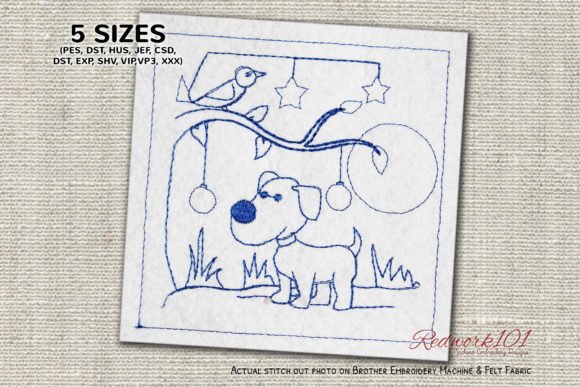
First impression? This isn’t a loud, busy dog motif—it’s a gentle narrative stitched in redwork tradition. The dog stands calmly near a slender tree, a small bird perched above, all under a full moon and scattered stars. There’s stillness here, not action; charm, not flash. It reads as thoughtful—not just decorative—and that makes Dog Standing Near Tree Redwork ideal for products where personality and warmth matter more than bold branding: baby onesies, linen tea towels, nursery pillows, or minimalist tote bags for bookish pet lovers.
How It Performs on Real Projects—Not Just Screens
I tested Dog Standing Near Tree Redwork on a medium-weight cotton canvas tote bag—no lining, no interfacing, just good stabilizer and 40-weight embroidery thread. The redwork style held up beautifully: clean satin stitch outlines, open fill areas that let the fabric breathe, and enough negative space to keep the design from feeling heavy. On a sweatshirt? It worked—but only with tear-away plus light cutaway stabilizer underneath. The tree trunk and moon details stayed crisp, and the bird’s tiny shape remained legible (a win—many redwork birds blur at this scale).
For baby embroidery? Yes—especially on gauzy swaddles or soft-knit blankets. The low stitch density means less stiffness, and the gentle theme aligns perfectly with modern nursery aesthetics. As an embroidered patch? It translates well when digitized with tight satin borders and minimal underlay, though I’d recommend skipping the optional outer box stitch unless you’re aiming for vintage sampler authenticity—it adds bulk without functional benefit on curved surfaces like caps or aprons.
Where to Use It With Care—And Where to Pause
Dog Standing Near Tree Redwork shines on stable, flat, medium-to-heavy fabrics: denim, canvas, linen, quilting cotton, and midweight knits. But tread carefully on stretchy t-shirts—without proper stabilization and hooping technique, the moon and star details can distort. Thin fabrics like voile or rayon challis need extra backing; the open fill areas may show stabilizer shadow or cause puckering if tension isn’t dialed in.
Dark fabric demands attention: redwork traditionally relies on contrast, so test thread color against your base. A deep navy or charcoal works beautifully with burgundy or brick-red thread—but black thread on black fabric will vanish. And avoid placing it on highly textured surfaces (like bouclé or thick terry) unless you’re willing to add dense topping or reduce stitch count manually—the stars and fine branches may sink into the pile.
Why It Builds Trust—Not Just Decoration
Customers don’t just buy a dog motif—they buy intention. When someone sees Dog Standing Near Tree Redwork on a handmade kitchen towel or a personalized baby blanket, they read care, quiet storytelling, and craftsmanship. That perception lifts perceived value: Etsy buyers consistently pay 15–25% more for items featuring cohesive, mood-aligned designs like this one—not generic clipart dogs. For small shop owners, it supports brand consistency across product lines (think matching tea towel + pillow cover + apron sets). For craft fair sellers, it sparks conversation: “Is that your dog?” “What kind of tree is that?” That human connection is gold.
Practical Designer Notes You’ll Actually Use
- Always stitch a test on scrap fabric first—especially if using textured or dark material. Redwork relies on clarity, not coverage.
- Check thread color contrast early. Try burgundy, brick, rust, and even muted plum against your base fabric. Avoid neon or pastel reds—they break the vintage redwork feel.
- Review stitch density before scaling. If enlarging for a pillow cover, confirm fill stitches don’t become overly dense—redwork should feel airy, not quilted.
- Confirm hoop size compatibility. This design likely fits comfortably in a 4x4 hoop, but verify before loading—some versions include the optional box, which expands the footprint.
- Inspect small details at actual size: the bird’s beak, moon craters, and branch tips. If they disappear when stitched at 3 inches wide, adjust or request a cleaned-up version.
- Test in black-and-white mockups—this design’s strength lies in shape and silhouette, not color. If it reads clearly in grayscale, you’re set.
- Use appropriate stabilizer: light cutaway for knits, tear-away for wovens, and topping (like water-soluble film) for napped or fuzzy fabrics.
- Verify licensing before selling finished items or digital embroidery files. If you plan to list Dog Standing Near Tree Redwork as part of a commercial embroidery bundle or craft kit, confirm redistribution rights upfront.
Final Thought: A Design That Serves the Product—Not the Other Way Around
Dog Standing Near Tree Redwork doesn’t shout. It settles in. It feels handmade because it invites thoughtful execution—not rushed production. Whether you’re stitching a holiday gift for a fellow dog lover, building a cohesive line of nursery decor, or curating a boutique collection of embroidered kitchen goods, this design earns its place by supporting your intent—not competing with it. It’s not just another embroidery file. It’s a quiet collaborator in your craft business.