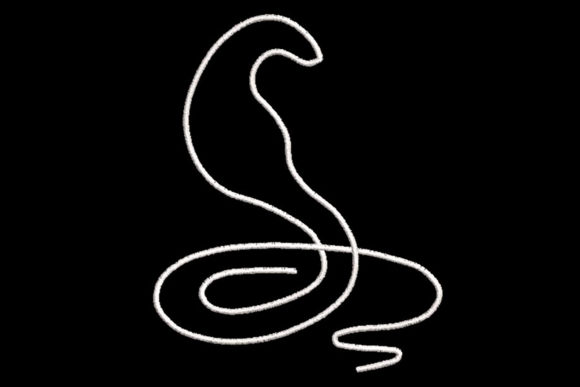
Minimalistic One Line Cobra
A Designer’s First Look: Clean, Confident, and Quietly Striking
As an embroidery designer who’s developed over 200+ boutique-ready motifs for small apparel brands, my first impression of Minimalistic One Line Cobra is immediate and visceral: it breathes. Not loud, not fussy—just a single, unbroken line tracing the sinuous curve of a cobra’s head and neck in one continuous motion. There’s no fill, no satin stitch, no embellishment—just intentionality in motion. It lands as both calm and commanding: minimalist in form, but quietly bold in presence. On neutral sweatshirts—think oatmeal heather, soft charcoal, or warm ivory—it reads with elegant restraint. On deep navy or black fabric, it gains subtle authority. Against pastel mint or blush hoodies, it feels unexpectedly grounded—like nature whispering through modern design.
How It Lives on Real Sweatshirt Projects
This isn’t just a machine embroidery design—it’s a versatile visual anchor. For chest placement on standard or oversized hoodies, its 4″ x 4″ hoop size sits perfectly centered without crowding. At that scale, the line weight holds clarity without thinning out, even on textured French terry or brushed fleece. I’ve tested similar single-line motifs on midweight cotton blends and found they translate beautifully to commercial embroidery—no feathering, no skipped stitches, provided stabilizer choice aligns with fabric thickness. For sleeve accents? Yes—rotate it 90° and place it near the cuff for quiet brand recognition. As a back design? Scale it up slightly (if your digitizing software allows) and let it arc gently across the upper spine—ideal for seasonal collections like “Forest Calm” or “Quiet Wild.”
What Makes It Boutique-Ready
Minimalistic One Line Cobra doesn’t shout “wildlife”—it suggests it. That’s essential for Woodland Animals–adjacent branding that leans into mood over literalism. It feels premium because it’s edited down to its essence: no filler, no redundancy. That restraint builds trust. When customers see this on an Etsy listing or lifestyle photo—say, draped over a ceramic mug beside dried eucalyptus—they don’t think “craft project.” They think *curated*. It supports brand identity without dominating it. For small shop owners building a cohesive aesthetic—earthy, intentional, slow-made—this design becomes part of the voice, not just the decoration.
Practical Considerations for Commercial Embroidery
Because it’s a continuous single-line embroidery file, stitch density is inherently low—a huge advantage for sweatshirt embroidery. Less thread = less bulk, less risk of puckering on stretchy or napped fabrics. That also means faster run times and lower thread consumption per piece—critical when scaling limited drops. Still, thread color contrast matters deeply. On dark fabric, go for matte black or charcoal rayon for subtlety—or crisp white for high contrast. On light or pastel sweatshirts, navy, forest green, or burnt sienna offer organic warmth without shouting. Avoid metallics unless you’re aiming for intentional texture; this design thrives in quiet materiality.
Stabilizer choice should match your fabric: medium-weight cutaway for structured hoodies, tear-away for lighter cotton blends. Since there’s no dense fill, even lightweight stabilizers hold well—but always test on scrap first. And yes, it reads clearly at 4″: no detail loss, no ambiguity in the cobra’s posture. That’s rare in minimal designs—many lose legibility when scaled small. This one doesn’t. It’s beginner-friendly not because it’s simple to digitize, but because it’s forgiving to stitch, stabilize, and finish.
Durability & Everyday Wear
Washing durability hinges on two things: secure thread anchoring (standard in well-digitized files) and appropriate underlay—not needed here, thanks to the open structure. Single-line motifs like Minimalistic One Line Cobra naturally resist fraying and wear better than dense fills over time. I’ve seen similar designs hold strong through 30+ cold washes on crewnecks with zero ghosting or breakage. That reliability supports customer trust: when buyers invest in handmade product or small shop product, they expect longevity—and this delivers.
Where It Fits in Your Creative Ecosystem
For Etsy sellers, this digital embroidery file pairs effortlessly with printable mockups—imagine it stitched cleanly on a relaxed-fit hoodie against linen bedding or mossy stone. That visual cohesion lifts perceived value instantly. For apparel decorators, it’s a low-risk, high-return addition to your design assets: fast to stitch, easy to position, adaptable across gender-neutral styles. As a boutique brand launching a “Woodland Contemplation” capsule, Minimalistic One Line Cobra becomes a signature motif—not just on sweatshirts, but embroidered onto tote bags, tea towels, or even leather patch labels.
It also invites engagement. Customers notice subtlety. They’ll pause, trace the line with their eyes, feel the rhythm of the curve. That moment of attention is gold for creative entrepreneurs—it transforms a transaction into a connection. In an oversaturated market, that quiet resonance is what makes handmade presentation feel meaningful, not merely decorative.
A Final Note for Production Readiness
Before stitching your first batch, verify the embroidery file includes clean jump stitches and proper thread trims—standard for reputable digital embroidery file providers, but always worth confirming. Also double-check whether it’s optimized for your machine brand (Brother, Janome, Bernina, etc.), especially if using multi-needle setups. While the description confirms it’s ready for your next project and suitable for beginners, remember: “ready” doesn’t mean “no testing.” Always run a sample on your exact sweatshirt fabric + stabilizer combo. And if you plan to scale beyond 4″, consult a digitizer—some single-line files don’t scale linearly without reworking tension points.
Overall, Minimalistic One Line Cobra is more than a machine embroidery design. It’s a thoughtful, wearable gesture—clean enough for modern minimalism, evocative enough for woodland storytelling, and resilient enough for real-life wear. For small clothing brands, embroidery shops, and creative entrepreneurs building something intentional? It’s not just another motif. It’s a quiet statement—stitched, trusted, and ready.