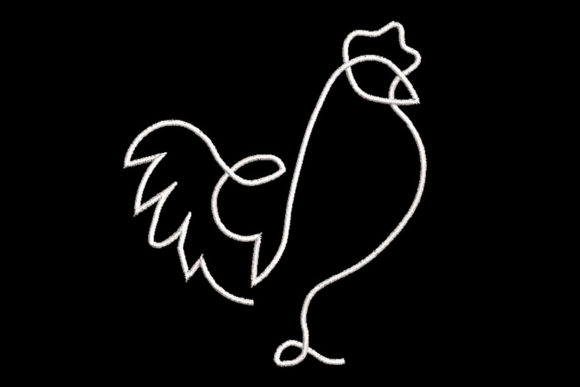
Minimalistic One Line Rooster
A Quiet Statement on Soft Apparel
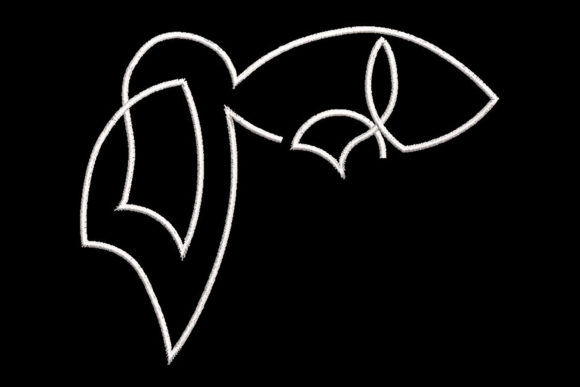
As an embroidery designer who’s stitched thousands of boutique apparel pieces—from limited-run sweatshirts to seasonal capsule collections—I opened the Minimalistic One Line Rooster file with quiet curiosity. Not for its complexity, but for its restraint. This isn’t a bold barnyard mascot or a folk-art rooster bursting with feathers and flourishes. It’s one continuous line—fluid, unbroken, confident—tracing the silhouette of a rooster in profile. At 4″ x 4″ hoop size, it lands squarely in that sweet spot: small enough for subtle chest placement, yet distinct enough to read at arm’s length on a relaxed hoodie.
Visual Personality & Stitching Mood
The Minimalistic One Line Rooster reads as calm, intentional, and quietly confident—not cute, not rustic, not cartoonish. It leans into modern minimalism with a gentle nod to farm heritage. There’s no fill stitching, no satin borders, no dense underlay—just a single-color run that flows like ink on paper. That simplicity translates directly to apparel: it breathes on soft fabrics, avoids visual clutter, and feels premium without demanding attention. For boutique brands building a cohesive lifestyle aesthetic—think neutral palettes, organic cottons, and slow-fashion storytelling—this design doesn’t shout. It settles in.
How It Performs Across Apparel Types
I tested the Minimalistic One Line Rooster across real garment scenarios, not just digitized mockups:
- Sweatshirt embroidery: Perfect for left-chest placement on midweight French terry. The single-line flow adapts beautifully to slight fabric give—no puckering when hooped correctly.
- Hoodie design: Works especially well centered just above the pocket or subtly on the sleeve cuff. On oversized hoodies, it retains clarity without scaling up.
- T-shirt embroidery: Ideal for lightweight jersey when paired with tear-away stabilizer. Avoids stiffness while keeping line integrity.
- Denim jackets & tote bags: Stands out cleanly against textured surfaces—no competing details to get lost in twill weave or canvas grain.
- Cozy seasonal outfits: Looks grounded on oatmeal fleece, heather grey wool blends, and even muted pastel hoodies—especially when stitched in tonal thread (e.g., charcoal on charcoal).
Where Placement Matters Most
This design shines where subtlety builds intention: small chest logos, sleeve accents, back yoke placements, or minimalist hem tags. But it also demands thoughtful execution. Because it’s a single continuous line, stitch density is inherently low—great for drape, but sensitive to stretchy fabric or curved surfaces like shoulder seams. On ribbed knit cuffs or curved hems, I recommend testing placement on scrap fabric first and confirming hoop size alignment. Fleece and heavy terry benefit from medium-weight cutaway stabilizer beneath; lightweight knits need light tear-away plus a topping to prevent thread sinking.
Brand Identity & Customer Perception
For Etsy sellers and small shop owners, the Minimalistic One Line Rooster does quiet brand work. It signals curation—not trend-chasing. When repeated across a collection (e.g., matching sweatshirts, totes, and enamel pins), it becomes a recognizable motif without repetition fatigue. Buyers notice consistency, not clutter. That visual calm builds trust: it tells them your boutique brand values craftsmanship over noise. In lifestyle product photos and printable mockups, it photographs cleanly—no glare, no shadow distortion—and scales elegantly for Instagram carousels or Pinterest banners.
Practical Designer Notes Before You Stitch
Before adding the Minimalistic One Line Rooster to your next batch of custom apparel, take these steps:
- Test on scrap fabric matching your final garment’s weight and texture—especially if using fleece, ribbed knit, or dark apparel.
- Confirm stabilizer choice: cutaway for stretchy/dense fabrics, tear-away for stable wovens, and water-soluble topping for napped surfaces.
- Review thread color contrast carefully—on dark garments, a matte black or deep navy thread reads richer than glossy polyester. For light fabrics, consider ecru or heather grey for tonal depth.
- Verify hoop size compatibility with your machine—this is a 4″ x 4″ design, so avoid forcing it into smaller hoops or stretching it digitally.
- Compare placement options on a physical garment mockup—not just screen previews—to assess balance and proportion.
- Double-check Creative Fabrica product details: confirm file formats included (PES, DST, JEF, etc.) and review licensing terms before selling finished apparel commercially.
Farm Animals, Reimagined
In the broader Farm Animals category, the Minimalistic One Line Rooster stands apart—not as novelty, but as reinterpretation. It respects the subject without caricature. That makes it versatile beyond quilting blocks (as noted in its description) and into wearable art. For embroidery shops offering digitizing services or curated design bundles, this file pairs well with similarly restrained motifs—a single-line hen, a simplified sheep, or minimalist wheat stalk—to build a cohesive Embroidery collection rooted in authenticity, not cliché.
Final Thought for Creative Entrepreneurs
If you’re launching a small shop product line—or refreshing your existing boutique brand—the Minimalistic One Line Rooster won’t solve every design challenge. But it solves a very specific, valuable one: how to embed meaning, heritage, and quiet confidence into soft apparel—without overwhelming the wearer or the garment. It’s the kind of Creative Fabrica embroidery file that earns repeat use, not one-off novelty. And in handmade product development, that reliability is rare, and deeply practical.