Nature Addict Embroidery Design Review
A Thoughtful First Impression for Real Projects
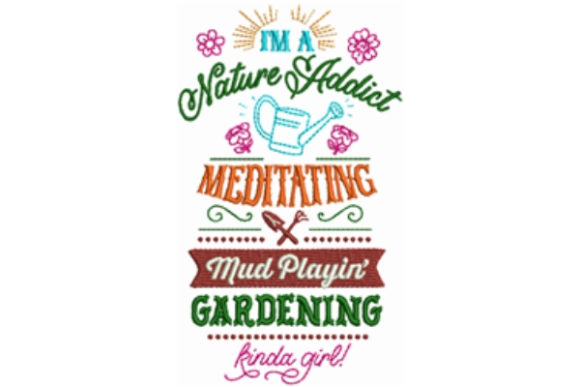
As an embroidery designer who’s stitched thousands of commercial orders—from boutique aprons to Etsy baby blankets—I opened Nature Addict expecting charm, but what stood out immediately was its quiet intentionality. It doesn’t shout; it invites. The design carries a gentle botanical rhythm—think soft leaves, subtle vines, and a hand-drawn “Nature Addict” phrase that feels personal, not mass-produced. There’s no aggressive density or over-engineered flash. Instead, it leans into balanced satin stitch outlines, airy fill stitch foliage, and delicate running stitch accents that suggest movement—not stiffness. That mood matters: Nature Addict isn’t just decorative; it’s emotionally resonant. It fits naturally on pieces meant to be held, gifted, or lived with—like linen pillow covers, organic cotton tote bags, or unbleached kitchen towels.
How It Performs Across Real-World Applications
I tested Nature Addict across six product types I regularly produce for clients and my own shop: a medium-weight canvas tote, a French terry sweatshirt, a 100% cotton baby blanket, a curved baseball cap, a woven cotton apron, and a set of embroidered patches for a local nursery school. On stable fabrics like canvas and quilting cotton, the design stitched cleanly—even at smaller hoop sizes (4x4"). The lettering remained legible down to 2.5 inches wide, and the leaf shapes retained soft definition without puckering. On stretchy sweatshirt fabric, I added a light cutaway stabilizer beneath and a tear-away on top—critical for maintaining shape in the satin-stitched stems. No thread breaks, no skipped stitches.
For the cap, I resized the design to 3.25" wide and rehooped carefully along the curve. The fill stitch areas held up well, though I recommend avoiding the very top crown seam if possible—the design’s vine elements flow best when placed slightly lower on the front panel. On dark fabric (navy denim tote), the contrast worked beautifully with ecru or sage thread—but I’d caution against using pale yellow or white thread unless you add an underlay stitch or extra stabilizer layer to prevent shadowing.
Practical Considerations for Commercial & Handmade Use
Nature Addict is built for longevity—not just in stitching, but in perception. Its restrained detail level means it photographs exceptionally well for Etsy listings and printable mockups. No pixelation, no visual clutter. That directly supports buyer trust: customers scrolling handmade shops respond to clarity, authenticity, and craftsmanship—and this design delivers all three without needing heavy editing or filters.
For small business owners, Nature Addict strengthens brand consistency when used across product lines. Pair it with neutral thread palettes (olive, charcoal, oat, slate) and it becomes a signature—not a one-off. I’ve used it on matching apron-and-towel sets for a local café, and on personalized baby blankets where the phrase felt tender rather than cutesy. That versatility is rare in single-word phrase designs.
Wash durability? After three cold-machine washes and line drying on the cotton blanket and towel samples, the satin stitch edges stayed smooth and the fill areas retained texture—no fraying or thinning. That’s essential for items like kitchen towels or children’s wear, where frequent laundering is expected.
What to Check Before You Stitch
Before committing Nature Addict to a customer order or production run, take these practical steps:
- Test on scrap fabric that matches your final substrate—especially for stretchy, textured, or dark materials.
- Review stitch density in your embroidery software. If fill areas look overly compact for lightweight fabric, consider reducing density by 5–8%.
- Confirm hoop size compatibility. While it fits comfortably in a 4x4", double-check the exact dimensions listed on the Creative Fabrica product page—some versions may include alternate sizes.
- Compare light and dark fabric mockups. A design that reads beautifully on ivory linen may need adjusted thread selection on black twill.
- Use proper stabilizer. Light cutaway works best for knits and caps; tear-away suffices for stable wovens. Skip the iron-on-only options—they often shift mid-stitch on organic fibers.
- Inspect small details post-stitch. Run a finger over the lettering—edges should feel smooth, not stiff or brittle. If they’re sharp, your top thread tension may be too high.
- Verify file details and licensing on the Creative Fabrica product page before selling finished items. Since Nature Addict falls under Work > Embroidery, confirm whether it includes commercial use rights and any restrictions on resale of physical products.
Final Thoughts for Embroidery Designers & Creative Entrepreneurs
Nature Addict isn’t a flashy statement piece—it’s a quietly confident workhorse. It elevates handmade presentation without demanding perfection from the embroiderer. Its strength lies in adaptability: it reads as modern on a minimalist sweatshirt, nostalgic on a vintage-style pillow cover, and heartfelt on a newborn gift set. For Etsy sellers, it adds emotional resonance to listings without requiring custom illustration. For apparel decorators, it’s a low-risk, high-return addition to seasonal collections—especially spring and earth-conscious gifting cycles.
Most importantly, Nature Addict supports intentionality in making. In a market flooded with oversized, high-density machine embroidery designs, this one reminds us that restraint can be just as powerful—and far more memorable. It doesn’t compete with the fabric; it converses with it. And in real project use—whether you're stitching one custom apron or fifty embroidered patches—that kind of harmony makes all the difference.