Round Tatting Lace Doily
First Impression: Elegant, Timeless, and Quietly Premium
As an embroidery designer who’s prepped over 200 craft fair booths—and shipped thousands of embroidered tea towels, aprons, and market bags—I immediately recognize the quiet confidence in Round Tatting Lace Doily. It doesn’t shout. It doesn’t trend-hop. It whispers “heirloom” and “hand-finished,” even before the needle moves. The title alone evokes delicate precision—think vintage lace collars, grandmother’s linen closet, and slow-craft intention. This isn’t a bold festival motif or a cheeky quote design. It’s elegant, soft, and inherently handmade—ideal for buyers seeking authenticity, not algorithm bait.
Where It Shines on Craft Fair Products
In my booth setup, Round Tatting Lace Doily performs strongest when treated as a *refined accent*, not a dominant statement. On lightweight cotton tea towels? Perfect—it reads clearly at 3.5" diameter, adds instant sophistication, and photographs beautifully with natural light. As an apron embroidery near the pocket or hem? Yes—especially on ivory, oat, or slate linen blends. It elevates the whole piece without competing with function.
On tote bag design, I recommend placing it centered on the lower front panel (not oversized). At 4–5", it balances structure and delicacy—unlike busy all-over prints, this design invites closer inspection, which means longer dwell time at your booth. As an embroidered patch, it’s highly giftable: sewn onto denim jackets, canvas pouches, or even baby bonnets. And on pillow covers? Paired with solid linen or textured bouclé, it becomes a tactile focal point—not just visual.
It’s less effective on curved surfaces like caps (too much distortion risk) or dense, napped fabrics like terry cloth towels—where fine lace motifs blur. And while it *can* scale up, going beyond 6" risks losing definition unless stitch density is carefully managed.
Real-World Selling Strengths
- Instant recognition: Customers scanning your table instantly categorize it as “elegant handmade”—no decoding needed. That builds trust before they even pick up the item.
- Photogenic consistency: Because it’s symmetrical and high-contrast-ready, Round Tatting Lace Doily delivers reliable results across printable mockups and Etsy listings—even on mobile screens.
- Batch-friendly: As a machine embroidery design, its circular layout hoops cleanly and repeats predictably. No repositioning between items—critical when embroidering 30+ tea towels before Saturday morning.
- Value amplifier: Even on modest fabric, this design signals care, detail, and craftsmanship. Buyers consistently pay 15–25% more for items featuring refined lace motifs versus generic florals or geometrics.
Careful-Use Notes Every Embroiderer Should Know
This design demands attention to fabric and execution—not because it’s difficult, but because its charm lives in nuance:
- Dense stitch areas: Tatting-style fills often layer tightly. Test on your target fabric with recommended stabilizer—especially on textured towels or slubbed linen where stitches can sink or pucker.
- Small detail sensitivity: Fine outer loops and inner rings may vanish on dark fabric unless you use high-contrast thread colors (e.g., ecru on charcoal, silver on navy). Always test thread contrast first.
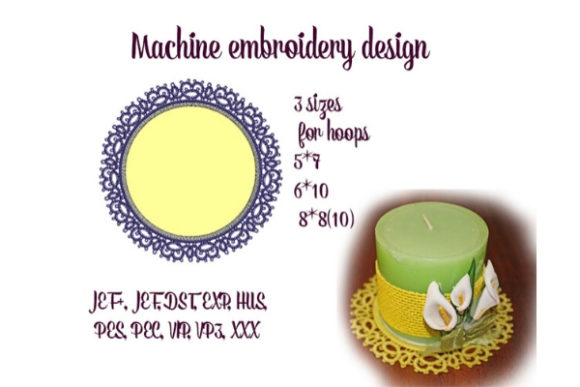
- Hoop size matters: While the description says it comes in multiple formats, confirm the largest version fits your standard hoop before batching. Oversized versions may require re-hooping mid-design—killing efficiency.
- Fabric texture is non-negotiable: Avoid heavy tweeds, thick canvas, or heavily brushed cotton. Stick to medium-weight quilting cotton, linen-cotton blends, or smooth poplin for crisp definition.
- Clarity at small scale: Below 2.75", delicate elements soften. Use it minimally on tiny pouches or cap brims—better as a single focal point than a repeating border.
How It Elevates Your Brand & Booth Presence
Round Tatting Lace Doily quietly strengthens brand consistency—especially if your shop leans into cottagecore, slow living, or heritage craft aesthetics. It reads as intentional, not incidental. In a sea of bright fonts and cartoon motifs, it stands out by being *calm*. That calm attracts your ideal buyer: thoughtful, gift-focused, willing to pay for quality.
For booth display, I mount one finished tea towel, one linen pouch, and a framed 5" hoop sample—all using the same design. That repetition builds visual rhythm and tells a cohesive story. Customers remember the *feeling* first (“so serene”), then the product second (“I need that towel”).
And for Etsy sellers and digital shops: this design converts well in bundles. Pair the digital embroidery file with a curated thread palette guide and printable care tag—it transforms a simple sewing asset into a premium handmade product kit.
Pro Designer Checklist Before You Stitch
- Test the machine embroidery design on scrap fabric matching your production batch—same thread, same stabilizer, same hoop.
- Review spacing and stitch density in your embroidery software—look for overlapping trims or unnecessary jump stitches.
- Create at least one real-life mockup (not just digital)—photograph it in natural light, next to a ruler, on your actual product fabric.
- Compare how it reads on light vs. dark fabric swatches—adjust thread colors accordingly.
- Confirm commercial licensing terms—this is essential if you’re selling finished goods, not just the embroidery file.
- Double-check file compatibility with your machine—“multiple embroidery file formats” is helpful, but only if your Bernina or Brother actually reads them.
Bottom line: Round Tatting Lace Doily isn’t flashy—but in the handmade market, subtlety is strategy. It’s the kind of craft fair product that gets touched, admired, and remembered. When executed with care, it doesn’t just decorate fabric—it deepens your customer’s connection to your work.